
New From Us:
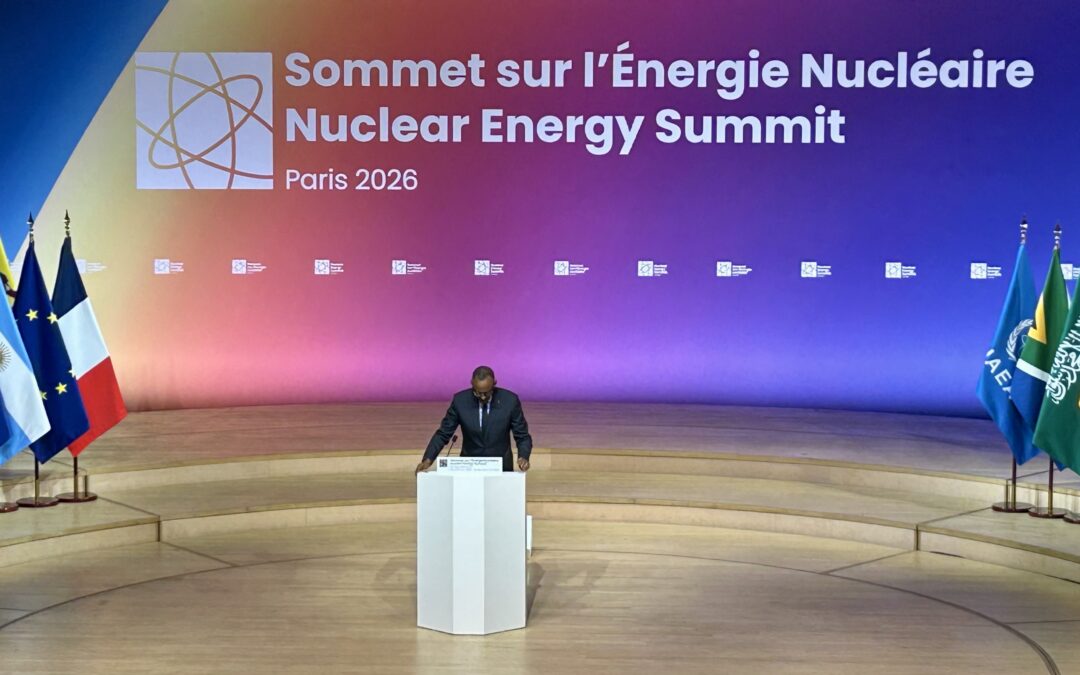
Co-Executive Director Karen Pak Oppenheimer participated in the second Nuclear Energy Summit in Paris last week. Something in the policy discourse shifted at that gathering, and it matters for anyone working on clean energy abundance.
38 countries now back the Triple Nuclear Declaration, including Belgium and Italy (both former nuclear phase-out nations) and China. The European Commission president called turning away from nuclear “a strategic mistake.” Rwanda, Ethiopia, Bangladesh, and Egypt were in the room making the case that nuclear power isn’t a privilege of the few, but an inalienable right for all. The debate has moved from whether nuclear belongs in the energy mix to how fast we can unlock it at scale.
For philanthropy, this moment surfaces four clear leverage points:
- Build the case: Belgium, Italy, and Greece all reversed long-standing opposition. Polling, strategic communications, and community engagement can replicate this, converting policymaker skepticism into enduring public support for nuclear’s promise of energy abundance.
- Grow the field: helping emerging nuclear nations clear shared structural roadblocks to safe and efficient deployment
- Make it bankable: standardized frameworks and new instruments that de-risk pilot projects can attract a larger, more diverse pool of financiers and drive down the cost of capital
- Improve guardrails: strengthening regulatory frameworks and safeguards at bodies like the IAEA to ensure deployment at scale is safe, secure, and efficient
The window for high-leverage philanthropic engagement is now.
Citing ‘Strategic Mistake’ EU Pivots Back to Nuclear Energy
On Tuesday, March 10, 2026, European Commission president Ursula von der Leyen told participants at a nuclear summit in Paris that “it was a strategic mistake for Europe to turn its back on a reliable, affordable source of low-emission power.” Following, she announced her endorsement of a return to nuclear energy which will be achieved through EU-backed investments in “innovative nuclear technologies.” The subsequent 2026-2027 Euratom Research and Training Work Programme outlined more than €330m in funding to support European nuclear power innovation.
Matthew Bunn: Iran’s Nuclear Materials and Equipment Remain a Danger in Active War Zone
In his new analysis published in The Conversation, Professor Matthew Bunn of the Harvard Kennedy School argues that the Trump administration has failed to publicly articulate what, if anything, it has planned to deal with Iran’s stockpile of enriched uranium or its remaining deeply buried nuclear facilities and technology. “In my view,” Bunn states, “only diplomacy can again provide strict limits and effective monitoring in the future.”
Iran and Russia Allege Projectile Struck Grounds of Bushehr Nuclear Power Plant in Islamic Republic
Both Iranian and Russian officials have publicly alleged that an American or Israeli projectile struck an area adjacent to the metrology service building located at the Bashehr Nuclear Power Plant, “in close proximity to the operating power unit.” The Rosatom Corporation, the Russian state-owned energy enterprise which operates the facility, reported no casualties at the site, while Iran’s Atomic Energy Organization stated “no financial, technical, or human damage occurred and no part of the plant was harmed.”
Middle East Conflict Sparks Renewed Global Interest in Nuclear Energy
As the American and Israeli war with Iran continues to drive up global energy costs, states around the world turn their sights toward nuclear power. President of the United States Donald Trump and Japanese Prime Minister Sanae Takaichi announced a joint initiative for a $40 billion nuclear power project. Meanwhile, Turkish Energy Minister Alparslan Bayraktar stated in an interview that Turkey is in talks with South Korea, Canada, China, and Russia to build four nuclear reactors in the northern province of Sinop and another four in the Thrace region.